The DPF Has a Bigger Job Than Most Drivers Realize
Modern diesel engines have to deal with soot before it leaves the exhaust system, and the diesel particulate filter does much of that work. The filter traps soot and periodically burns it away through regeneration. Problems begin when soot accumulates faster than the system can clear it, sometimes leaving a driver needing our I-76 semi towing service after the truck starts limiting performance.
Regeneration Is Part of Normal DPF Operation
For drivers covering long distances, the useful part is knowing what normal DPF behavior looks like. A warning light, repeated regeneration requests, or a change in engine performance gives you information before the truck reaches a more restrictive stage.
Regeneration raises exhaust temperature so accumulated soot can burn away. Trucks that spend enough time at sustained operating temperatures may complete this process during normal driving. Long periods of idling and repeated short, low-speed trips can make that harder.
Drivers should follow the manufacturer’s instructions if the truck requests a parked regeneration. Different engines and emissions systems have their own procedures, so the truck’s manual should guide what happens next.
Learn the Signs Before a Derate
A DPF warning deserves attention even when the truck still feels normal. If the warning remains active, returns repeatedly, or becomes more urgent, the filter or another part of the emissions system may need diagnosis. Waiting until power drops can turn an emissions issue into an I-76 truck towing call.
A useful DPF check includes:
- Watch for DPF and emissions warning lights
- Notice unusually frequent regeneration cycles
- Pay attention to changes in power
- Follow manufacturer instructions for regeneration
- Keep track of unusually long periods of idling
- Arrange diagnosis if warnings repeatedly return
The pattern matters as much as any individual warning. A truck that suddenly regenerates more often than usual is giving the driver something worth investigating. Addressing that change early can reduce the likelihood of needing semi towing along I-76 later.
A Derate Changes Your Options
A derate limits performance when the truck’s control system detects certain faults or operating conditions. Depending on the problem and its severity, a driver may notice reduced power, speed, or RPM. Once a truck cannot maintain normal operation, heavy truck towing near I-76 may become necessary rather than attempting to finish the run.
Repeated warnings should also be diagnosed rather than repeatedly cleared and forgotten. A DPF issue can involve the filter itself or other components in the emissions system, and identifying the cause requires more than guessing from a dashboard light. That is particularly important for drivers trying to avoid an unexpected I-76 commercial truck towing call.
Call Rocky Mountain Heavy Towing for Reliable I-76 Semi Towing
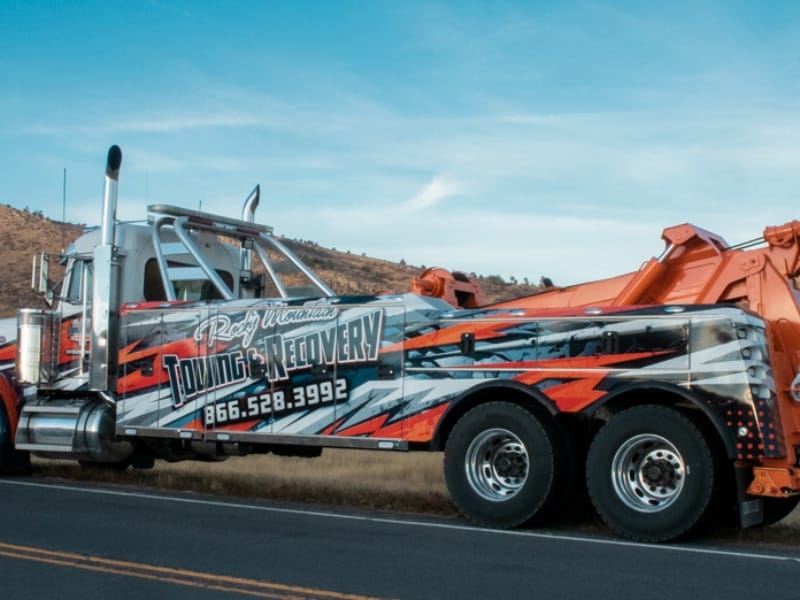
Rocky Mountain Truck Centers has provided truck services for more than 25 years, working with private owner-operators and international fleet management companies. Rocky Mountain Towing & Recovery Service focuses solely on heavy towing, heavy-duty recovery, and truck roadside assistance. Located beside I-76 and Colorado Highway 44, our locally owned operation provides heavy towing around I-76 for commercial drivers throughout Brighton and the surrounding area.
Our towing operation works alongside Rocky Mountain Mobile Truck Centers, giving customers support through different stages of a truck problem. We also handle situations including load shifts, tire blowouts, and heavy-duty roadside problems. If a DPF or another truck issue progresses until the rig cannot continue, I-76 semi towing is there to get the truck moving toward the service it needs.
FAQs
What does a DPF do on a diesel truck?
A diesel particulate filter traps soot from the exhaust. The truck then uses regeneration to burn much of that soot away.
How do I know if my DPF is having problems?
Watch for warning lights, more frequent regeneration cycles, reduced power, or changes in how the truck runs. Repeated warnings should be checked rather than ignored.
What is a parked regeneration?
A parked regeneration is a process that raises exhaust temperature while the truck is stationary to help burn accumulated soot. Drivers should follow the manufacturer’s instructions for their specific truck.
Can too much idling cause DPF trouble?
Yes. Extended idling and repeated low-speed driving can make it harder for some trucks to complete normal regeneration.
What happens when a truck goes into derate?
The truck’s control system limits performance because it has detected a fault or operating condition that needs attention. The driver may notice reduced speed, power, or RPM.
Should I keep driving if the DPF warning keeps coming back?
No. A warning that repeatedly returns should be diagnosed. Continuing to drive without addressing the cause can lead to greater performance restrictions.