The factors that tip a rig and the habits that keep one upright.
High-wind corridors and long open runs create conditions that stack the odds against loaded semis, and those of us in I-76 semi recovery see the same contributing factors come up time and again. A tractor-trailer rollover is rarely a sudden event, and it builds from factors the driver often has some ability to influence, which is what makes understanding them worth the time.
The rig, the road, and the driver each play a role. When all three are in good shape, the margin for error stays workable. When any one of them is compromised, a curve or a gust of wind that would otherwise be routine becomes something else entirely.
How Rollovers Develop
A loaded semi rolls over when lateral force exceeds the truck’s tipping threshold, and that threshold is lower than most people assume. For a fully loaded trailer with a high center of gravity, a modest turn at highway speed can generate enough force to start a tip. Most drivers don’t feel the lean until the process is already underway.
The trailer is where the risk concentrates. The cab stays more stable in a lateral event because of its lower profile and the pivot point between the two. The trailer, tall and fixed on its axles, is where tipping force builds. Load height, suspension condition, and cargo distribution all affect where that threshold sits, and those variables change from run to run.
Wind Load on Open Runs
A semi presents a large flat surface to crosswind, and at highway speed, sustained gusts can generate lateral forces comparable to hard cornering. Drivers logging long straight stretches can be caught off guard at bridge approaches or where terrain opens up after a sheltered section. Empty or lightly loaded trailers carry the highest risk because less downward force is holding the wheels to the road.
Fatigue and Delayed Reaction
Fatigue doesn’t announce itself. A driver who has been running for hours without adequate rest may feel capable of continuing but has already lost meaningful reaction time. A rollover sequence that an alert driver catches early, by easing off the throttle and straightening the wheel, can outpace a fatigued driver’s response entirely. Hours-of-service limits exist for exactly this reason.
What Keeps a Rig on Its Wheels
Consistent rollover prevention requires attention at the driver, carrier, and equipment level:
- Roll stability systems apply braking to individual axles when lateral acceleration approaches the tipping threshold, often before a driver has time to react
- Pre-trip load checks should confirm even weight distribution and proper cargo securement, including after rest stops when loads may have settled
- Speed through curves and ramps should run well below the posted advisory speed for a loaded rig, not at it
- Route preparation means knowing where high-wind exposures, significant grades, and tight interchange geometry appear on a corridor before encountering them at speed
Carriers set the conditions drivers work within. Schedules that push hours-of-service limits add fatigue to whatever mechanical and road factors are already present. Building rest into routes reduces rollover risk at the organizational level.
When the Road Calls for Recovery
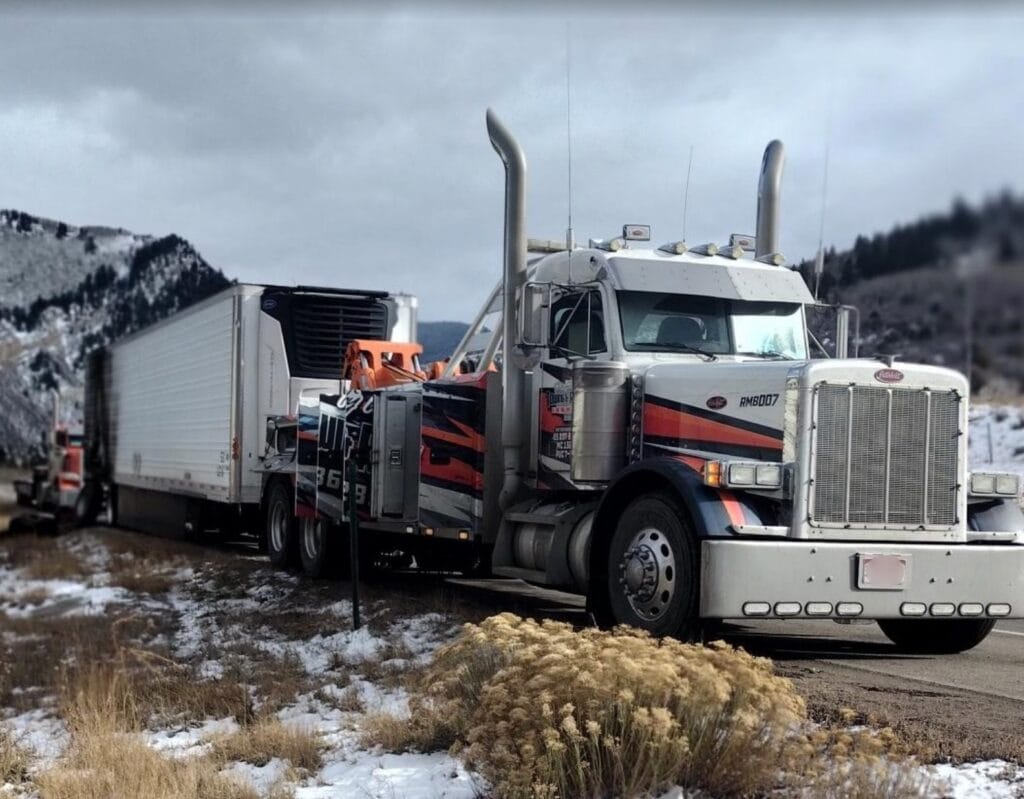
A tractor-trailer on its side is a multi-agency scene. I-76 semi recovery after a rollover requires rotator units, a carefully planned uprighting sequence, and load assessment before anything moves. Cargo condition, trailer position relative to the travel lanes, and any fluid spill all factor into how the work gets sequenced.
Clearing the scene efficiently takes experience, not just equipment. I-76 semi recovery crews who know the corridor can move through the process without creating new hazards or leaving the road in worse shape than they found it. Getting it done right the first time is what matters most.
Rocky Mountain Towing: I-76 Semi Recovery Ready When the Call Comes In
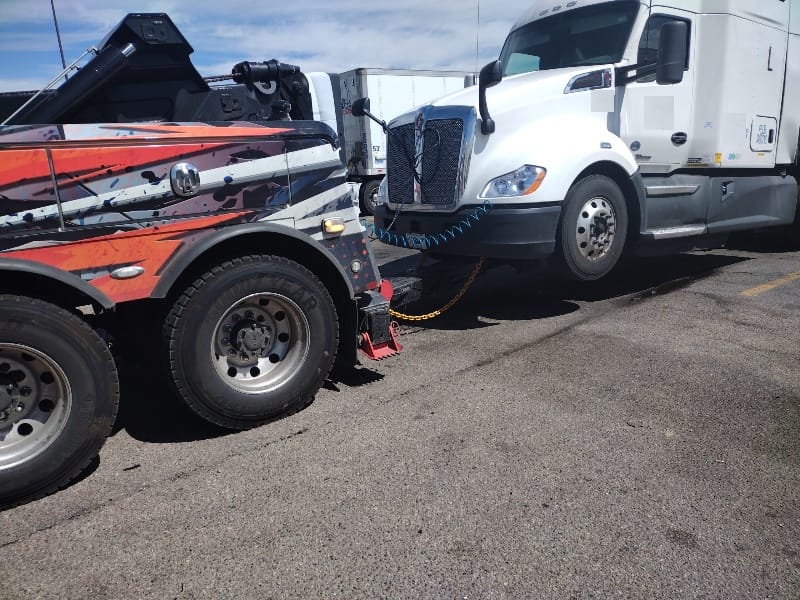
At Rocky Mountain Towing, I-76 semi recovery is a core part of what we do. Our heavy wrecker and rotator fleet handles the full range of commercial incidents, from mechanical failures and cargo events to complete rollovers. We run heavy towing calls day and night because commercial traffic doesn’t stop and neither do we.
Every I-76 semi recovery call requires a crew that reads the scene, coordinates with carriers and law enforcement, and executes the work in the right sequence. Rocky Mountain Towing brings that to every call on this corridor. When you need I-76 semi recovery fast, we’re ready.
FAQ
At what speed does a loaded semi become most vulnerable to rolling over in a crosswind?
There’s no universal number because the risk depends on trailer height, load weight, and wind direction relative to travel. A sustained crosswind of 30 to 40 mph can become dangerous at highway speed, particularly for high-sided trailers. Empty or lightly loaded trailers face the risk at lower wind speeds because the reduced weight provides less resistance against lateral force.
How does a roll stability system differ from anti-lock brakes?
Anti-lock brakes prevent wheel lockup during hard braking by pulsing brake pressure. Roll stability systems monitor lateral acceleration and lean angle, then selectively apply braking to specific axles to counteract tipping forces. They address different failure modes: ABS handles forward stopping, RSS handles lateral tipping. Some trucks have both systems working independently.
Do tanker trucks roll over more often than dry van trailers?
Liquid tankers have a notably higher rollover rate because partially filled tanks allow liquid to shift and surge during cornering and braking. That movement raises the effective center of gravity and adds unpredictable lateral force. A dry van with properly secured cargo behaves more predictably, though poor load distribution creates similar risks.
Can a driver recover from a rollover once it has started?
Recovery is possible only in the very early stages, when the trailer is beginning to lean but hasn’t yet passed the tipping point. Releasing throttle and countersteering can sometimes arrest a developing tip. Once the trailer is past the point of balance, physics takes over and driver input has little effect. Recognizing the warning signs early is the only reliable way to stay ahead of it.
How does tire condition affect rollover risk?
Underinflated tires increase the contact patch width and can cause the sidewall to flex excessively in cornering, reducing the trailer’s effective stability. A blowout on a loaded trailer shifts weight unpredictably and can trigger a tip, especially at highway speed. Tire pressure and tread condition are part of every pre-trip check for this reason.
What makes a highway corridor particularly high risk for commercial truck rollovers?
Corridors with frequent crosswind exposure, limited wind barriers, significant grade changes, and high-speed interchange ramps are consistently the most dangerous. Long, straight sections followed by abrupt curves catch drivers who haven’t adjusted their speed. Flat, open terrain with few geographical features to break the wind is especially problematic for high-sided trailers.