A Weather Radar and a Brake Check
The day before a heavy haul rolls toward the Rockies, the dispatcher has the weather radar open in one window and a route map in the other. Snow forecasts above 10,000 feet, wind reports across the eastern plains, and brake-check turnouts along every pass all get studied before a load number even gets dispatched. An I-70 heavy transport job is as much routing exercise; as it is a study of mountains, weather, weight, and braking capacity rolled into one plan. Heavy hauls everywhere take planning, and hauls through the Rocky Mountain corridor take more of it.
Elevation, grade, and weather all change in the space of a single county, and a plan that works fine across Kansas can fall apart at the first switchback above Idaho Springs.
Start With the Load and the Grade
Every heavy haul plan starts with the cargo, and a mountain run adds one more variable: how does the load behave when the trailer is angled at six or seven percent for ten straight miles? A planner looks at weight, center of gravity, and braking demands together, since the same load that handles fine on flat ground can heat brakes red on a long descent.
For loads above a certain weight, the planner builds in scheduled brake checks, runaway truck ramp locations, and engine-brake-capable routing. Skipping that math is how heavy rigs end up at the bottom of a pass with brake fires.
Weather Windows Matter More Than Distance
A 700-mile mountain haul can be smoother than a 300-mile one if the weather lines up. Spring blizzards, summer afternoon storms, and fall ice on shaded curves all force route or schedule changes. Experienced planners watch the National Weather Service mountain point forecasts more carefully than the calendar.
A loaded heavy rig pushing west in February may need to leave at 4 a.m. to clear the Eisenhower Tunnel before noon storms hit, or to wait two days for a snow window to open. Building schedule flexibility into the customer agreement is part of the job.
The Equipment Checklist for Mountain Hauls
Mountain runs add to the standard heavy-haul kit. Every I-70 heavy transport job benefits from a few extra items in the truck:
- Chains for every drive and trailer axle, sized for the rig
- A second jug of diesel exhaust fluid in case stops stretch long
- Wedges and blocks for emergency stops on graded shoulders
- Brake-temperature probes for descent checks
- Cold-weather load straps that flex at low temperatures
Each item earns its place during the trip. Carrying them across the Rockies is a different cost than discovering one missing at 11,000 feet.
Permits, Pilot Cars, and Pass Restrictions
Permits across the mountain states often come with conditions that flat-state permits do not. Some passes close to oversize loads during winter months. Eisenhower Tunnel restricts cargo above certain dimensions year-round, and the alternative routes add hours of climb. An I-70 heavy transport that includes a tunnel restriction can mean a Loveland Pass detour with its own low-temperature concerns.
Pilot cars play a different role in the mountains too. A lead car scouts curves and tunnel heights ahead of the rig, while a chase car warns following traffic of a slow-moving load on a long climb. Both roles matter when speed differentials hit 40 mph between the rig and the cars behind.
Rocky Mountain Towing on I-70 Heavy Transport Through the Front Range and Beyond
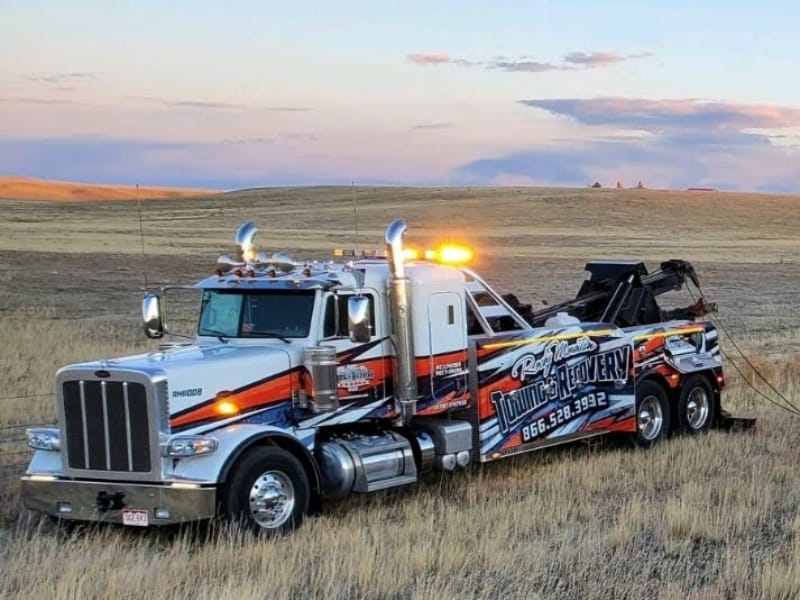
At Rocky Mountain Towing, every I-70 heavy transport call we plan starts with the same attention we have given heavy work for more than 25 years. From our base near I-76 and Colorado Highway 44, our drivers know the Front Range, the Eisenhower corridor, and the passes east and west of Denver as well as the rigs they run.
Heavy towing, heavy recovery, and I-70 heavy transport planning fill our day, and that focus is the reason customers keep calling back. If you have an I-70 heavy transport on the calendar, our dispatch team is ready to map the route with you.
Frequently Asked Questions
When do chain laws kick in for heavy rigs in the mountains?
Chain laws in many western states activate during winter storms or when posted conditions hit. Codes vary by state. Some require chains on commercial vehicles between specific mile markers from late October through mid-May during active weather. Drivers should monitor state DOT alerts and carry properly sized chains before any mountain run.
How does engine braking work on a long mountain descent?
Engine brakes, often called Jake brakes, use compression to slow the rig without burning service brakes. On a long grade, a driver sets a target speed, shifts down to a controlled gear, and lets the engine brake hold most of the deceleration. Service brakes get used in short, firm applications rather than dragged the whole way down.
Do altitudes above 8,000 feet affect a diesel rig’s performance?
Yes. Diesel engines lose power at altitude because the air carries less oxygen, which reduces combustion efficiency. Modern turbocharged engines compensate well, but drivers still notice slower acceleration and pull on steep climbs. Pre-trip checks at altitude should include air intake condition and turbo health.
What happens if a pass closes mid-haul?
The dispatcher and driver coordinate a hold-over plan. The rig pulls to a safe truck stop or staging area, and the driver waits for the road to reopen. For multi-day delays, the carrier may reroute around the closure or extend the schedule. Customers are notified as soon as the delay confirms.
How are heavy haul rates affected by mountain routing?
Mountain routes typically cost more because they take longer, burn more fuel on grades, and require additional safety equipment. Carriers often quote a base rate per mile and add a percentage for high-elevation corridors. Customers should ask about mountain surcharges during the booking call.
Can a heavy haul carrier reject a job for weather reasons?
Yes, and good carriers do. A driver or dispatcher refusing to launch into a storm front is making a safety call that protects the cargo, the rig, and other drivers on the road. Most carriers explain the reasoning to the customer and reschedule rather than running an unsafe trip.